Your phone isn't broken.
It's working exactly
as designed.
It's 11.40pm. You've been scrolling an hour and you don't remember the first forty minutes. Your shoulders are at your ears. You're vaguely sad and can't trace it to anything that happened in the room.
That's not bad luck. That's product design.
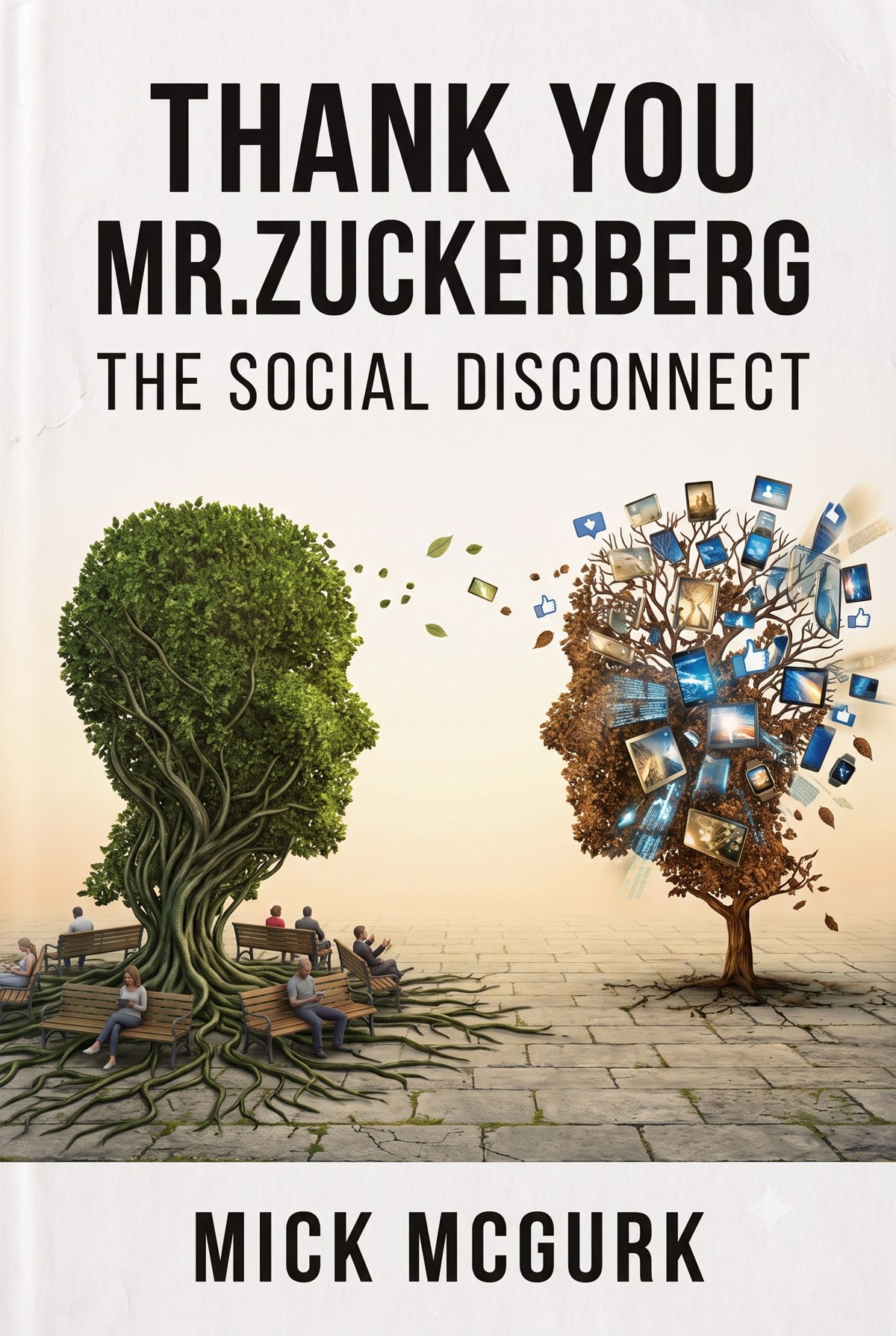
The problem
You're not weak. You're outgunned.
Some of the most talented engineers and behavioural psychologists on earth spent years building these platforms with one purpose: making sure that when you tried to stop, you couldn't. They did a good job. Respect the craftsmanship before you take a hammer to it.
of your remaining waking life is already spoken for by the screen, at current rates.
The hour we've all separately arrived at, in the same posture, with no name for it.
How long good intentions about phone use last before the habit reasserts itself.
Exits. There is no exit. There's only a better relationship — and that one is achievable.
The solution
Structure beats willpower. Every time.
This book doesn't ask you to bin the phone. That never works, and I wouldn't believe it from you — I don't even believe it from me.
Instead: sixteen exercises, twenty minutes each, that change the defaults rather than fighting them. Structural changes persist. Resolutions don't.
A 30-day digital detox you abandon on day five
A feed rebuild, a notification purge, and a phone that sleeps in another room
"A like button costs the giver nothing and gives the receiver something so weak it has to be administered hourly. It is the methadone of friendship."
Exercise one, right here, for free
The phone has been counting whether you wanted it to or not. Move the sliders.
Assumes life expectancy of 80 and roughly 5,800 waking hours a year. The real number is in Settings → Screen Time. Write it on paper.
Remaining life on the glass
Continue the work
Meet The Ulysses Method.
The companion book turns six episodes of James Joyce's Ulysses into a four-week pathway for rebuilding the attention your phone took apart.
What you actually get
12 chapters · 16 exercises · 4 appendices
The entomology of a billionaire
Zuckerberg studied not as hero or villain but as a specimen — a rare beetle found under a damp rock in northern California. We take notes.
Everything before Facebook
A short tour of the platforms that came first, because the instinct is older than the platform and worth seeing in its earlier forms.
The machine explained
How the feed works. How the algorithm decides what you see. What the For You Page is optimising for, which is not your happiness.
The platforms you use
Instagram, TikTok, Snap, Reels, BeReal, Threads, Discord. The current architecture of your attention, mapped.
Connection made us lonelier
The central argument of the book: a product sold as connection produced a generation reporting more loneliness than the one before it.
Dating apps
They get their own chapter because they have done their own damage. Bring a notebook and some resilience.
The pressure to perform
The creator economy, and what happens when the place you watched other people perform becomes the place you are expected to.
OnlyFans, a case study
How a basically decent founder vision gets reshaped by economics and ownership — and what it did to the visual culture of every other app you use.
Your mood, sleep and self
What all of this has done to how you feel, how you sleep, and your sense of who you are — including your relationship with your own face.
The rebuild
The practical chapter. Feed rebuild, notification purge, grayscale week, phone out of the bedroom. Structural changes that outlast intentions.
The political situation
Regulation, the DSA, the Online Safety Act, the Australian age limits — and where this might realistically go next.
The honest accounting
The chapter where I admit the man is not the devil. Grandparents saw grandchildren. Communities found each other. Not small things.
What readers say
I laughed at the title in a bookshop, bought it as a joke, and did Exercise One on the bus home. The number was obscene. I have not put my phone in the bedroom since.
The first self-help book that does not make me feel like the problem. It is honest about what you are up against, then it hands you a pen.
My mother left this on the kitchen counter hoping I would pick it up. I picked it up. Do not tell her.
Built on the research in Haidt's The Anxious Generation, Haugen's The Power of One, Zuboff's Surveillance Capitalism and the WSJ Facebook Files — then written the way Sean Lock would have said it out loud.
Questions, asked suspiciously
No. There is no exit and pretending otherwise is how these books fail. There is only a better relationship, and a better relationship is achievable. The book is about structure, not sainthood.
Read it. Do one exercise.
That's the whole deal.
Do one exercise and the book has paid for itself in a way nothing else on your shelf has managed this decade.
Also on Kindle — the device you bought to replace the books you stopped reading because of your phone